“There is nothing physically wrong with you, take paracetamol.”
– Many, many doctors I sought help from.
So what is Fibromyalgia? I hear you ask. Well, that in and of itself is tricky to answer! People can experience this chronic illness in many different ways, they can find relief in many different ways. What works for one, may not work for all.
My pain journey, like that of so many others, started after the birth of my second child. After he was born, he stopped breathing and it’s suggested that a traumatic moment such as this can trigger the illness.
My dad was diagnosed with Fibro when i was in my teens. Back then it was not a “known” illness. He had to jump through hoop after hoop, surrounded by the disbelief of friends and family who didn’t understand and were sure it was all in his head. Because I was aware of my dad and his pain levels (how certain things made him feel, how tired he got etc), when I started experiencing similar pains, my anxiety took over and I was SURE that I too had Fibro. Being only 18 at the time I went to my doctor and told him how I was feeling, only to be told there was nothing wrong with me and that they couldn’t help me. I’m sure lots of people have a similar story to mine. I believed the doctor. I agreed it must all be in my head and because I was worrying about it, I was exaggerating my own symptoms. Hello anxiety and depression! Needless to say, with years of pushing through, no reasons from the doctors for my pain, 10 years of struggling mentally and physically, two international house moves, (that’s a whole other story!) I finally cracked. I needed help and I was determined to be heard.
Imagine my surprise, the first doctor appointment I made, she listened to me. For once in 10 years, I felt heard. I was so relieved that someone believed me, I broke down crying. Someone wanted to help me! I was told a Fibro diagnosis was that of elimination. Lots of testing, lots of talking about how my body feels on a daily basis, how I can cope with what are considered to be normal tasks – standing at the oven to cook dinner? Hard! My long path to a recognised diagnosis began in January 2019, hampered by COVID19, but by September I had my letter. There was a name and I had ‘proof’ of my illness. Times had definitely changed and for the better. Fibro was more widely known and diagnosed. Though it can still be a tough process getting there.
Living with Fibro
Fibro is a tricky beast. One day you can feel fine! Nothing hurts, you can do all the jobs and feel energised. I had one of these good days on a day we happened to be visiting Monkey World. The kids were enjoying it, I was enjoying it. Then I hit “the wall” I had been warned about. Suddenly I was struggling to even lift my feet to walk. I ended up being stuck in bed for 2 days recovering. This is one thing you can’t possibly imagine until you experience it. The sheer levels of pain you can reach, that just become your new normal. Isn’t that sad? We live with these high levels of pain every day, no rhyme or reason as to where or when they will strike. The pain can travel around your body and can’t be predicted. Having experienced that, it was one of the major reasons as to my push for a diagnosis. I began talking to other people who suffer with Fibro, there are some great groups on Facebook, for example, where you can chat and ask questions. I was introduced to the ‘Spoon Theory’. This is used to help explain the toll many illnesses can take on the body, for me, Fibromyalgia. Let me explain…
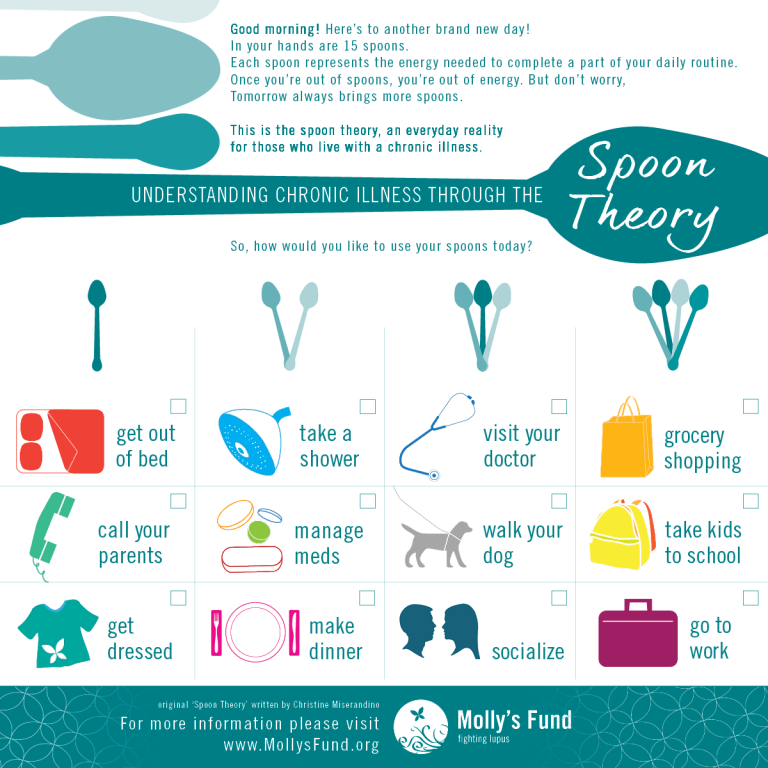
A normal, healthy person can have an unlimited amount of daily spoons. Now imagine you start your day with only 15 spoons. Someone living with a chronic illness has a limited daily amount. Each activity you do, costs you spoons and once they are gone, they are gone. If we push and use more than our allotted spoons for the day, we borrow them from the next day. That’s when we can suffer the most and doing so can result in days needed to recover. “Spoonies” must learn how to use their spoons wisely. If you didn’t sleep well last night? Well that’s one spoon gone before you even get out of bed. Speaking of getting out of bed? That’s another spoon! So before you even start your day you are down to 13. Need a shower? Down to 11. Going to work, that will cost you 4, so we are now at 7. Do you see where i’m going with this? A Spoonie can loose half their allotted spoons before the day has even really started. This is where it can be hard to acclimate to a new style of thinking. Yes, before my diagnosis, I still struggled, but I pushed my body to breaking point, without giving myself a break. I just assumed I was weak. Surely everyone must deal with this on a daily basis because I’ve been told it’s all in my head!? Learning to cut myself slack is difficult. I wish I could say was, but I still struggle with the “normal expectations” of being a parent and a business owner. I push myself too hard and then I break. But I’m learning, I’m starting to accept my limitations and finding ways to make it work better. Some days I have to give up all thoughts of work, other days I work for a few hours in the morning and then a few hours in the evening after the kids go to bed. Going from an extremely sporty teen to feeling like a broken adult is very hard.
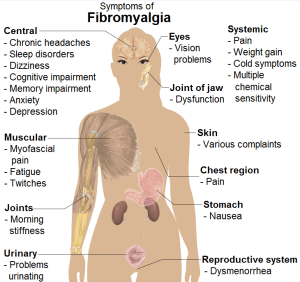
On a daily basis I deal with travelling pain, and not just fatigue but also insomnia. Constant joint stiffness, stomach issues, weight issues, fertility issues. Dizziness, Fibro Fog (cognitive impairment), memory impairment, anxiety and depression. All in addition to my asthma and migraines. As I am writing this, I’ve just finished a day running a market stall for my business. I definitely borrowed spoons from tomorrow, I know I will pay for it. But needs must. I have an amazing support network surrounding me and helping me. I’m one of the lucky ones and I know I’m fortunate to have them.
Big shout out to my fellow Spoonies! Yes, it’s hard. But we’ve got this. Be kind to yourself! If you feel your mental health deteriorating, don’t suffer in silence. Reach out for help.
If you know someone who suffers with a chronic illness; being there, understanding and helping take care of things that can cost spoons? That’s one of the best things you can do. We need you and we appreciate you. Living with a chronic illness can take a huge toll on mental health, reach out to your Spoonie, you could save a life when one of us falls prey to the dark thoughts.
Mental Health UK is one of many great resources available at your fingertips. Take a breath, talk to people. You are of value and deserving of help.
(Gentle, non pressure) hugs!
K
 Mama Needs a Drink!
Awesome post. I just realized I have more of these symbols than I thought.
LikeLike